

How to Choose the Right Solid Wood Console Table for Your Home
Every home has that one spot that never quite comes together. The wall next to the entrance that collects random clutter. The empty stretch behind the sofa that feels like wasted space. The hallway that's too narrow for anything big but too bare to leave as it is.
A solid wood console table is built exactly for moments like these. Slim enough to fit into tight spaces. Sturdy enough to actually be useful. And when it's made from real wood, beautiful enough to change the feel of an entire room.
But picking the right one takes a bit of thought. The wrong size can ruin a good wall. The wrong wood can mean replacing it in a few years. And the wrong style can make your room feel disconnected instead of pulled together.
This guide will help you get it right the first time. Whether you're furnishing a new place or just fixing that one corner that's been bugging you, you'll find everything you need to make a confident decision.
Where Does a Console Table Actually Work?

A lot of people think console tables are only for entryways. That's where they show up most often in home decor photos, sure. But the truth is, a wooden console table works well in more spots than most people realize.
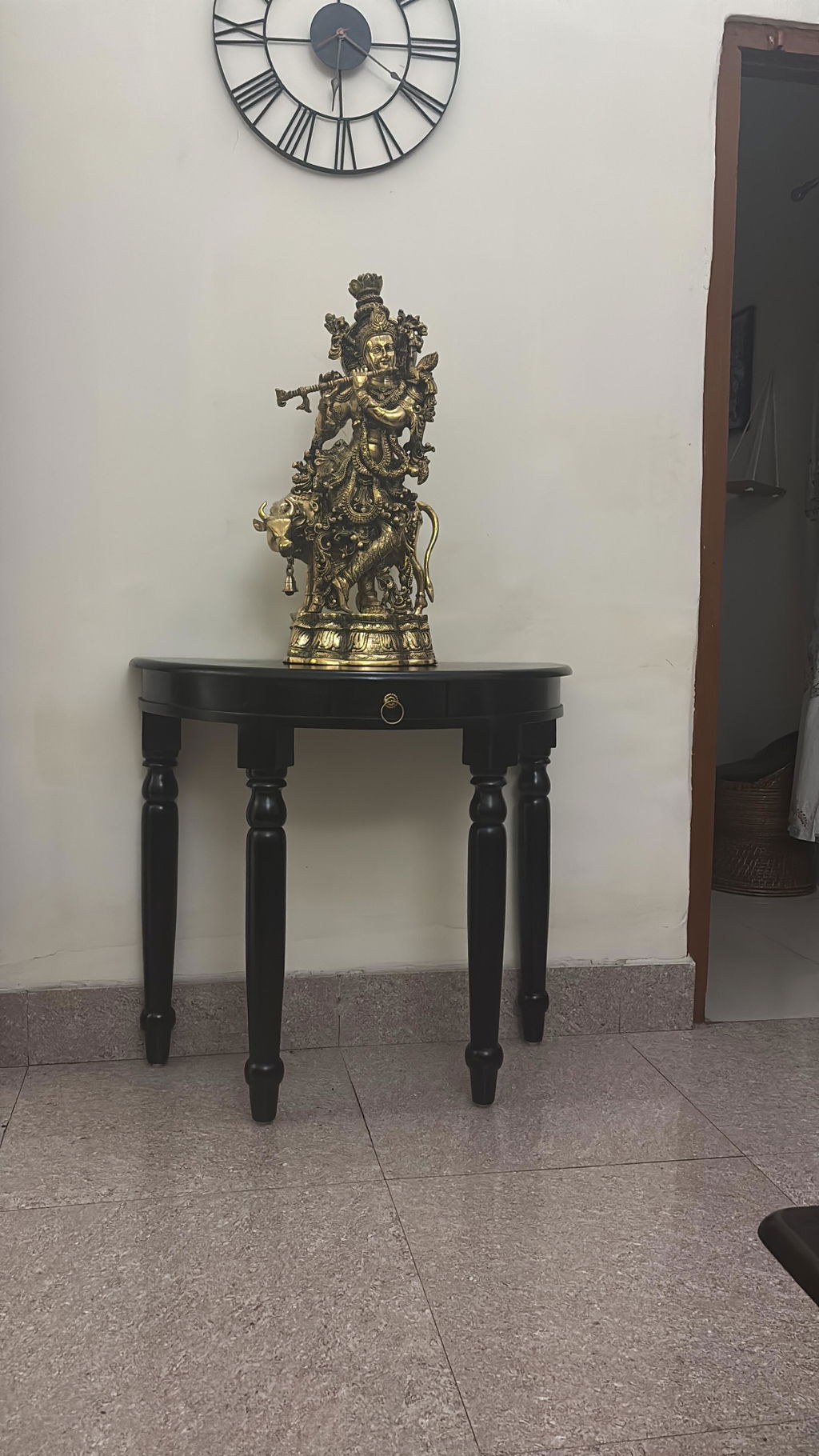
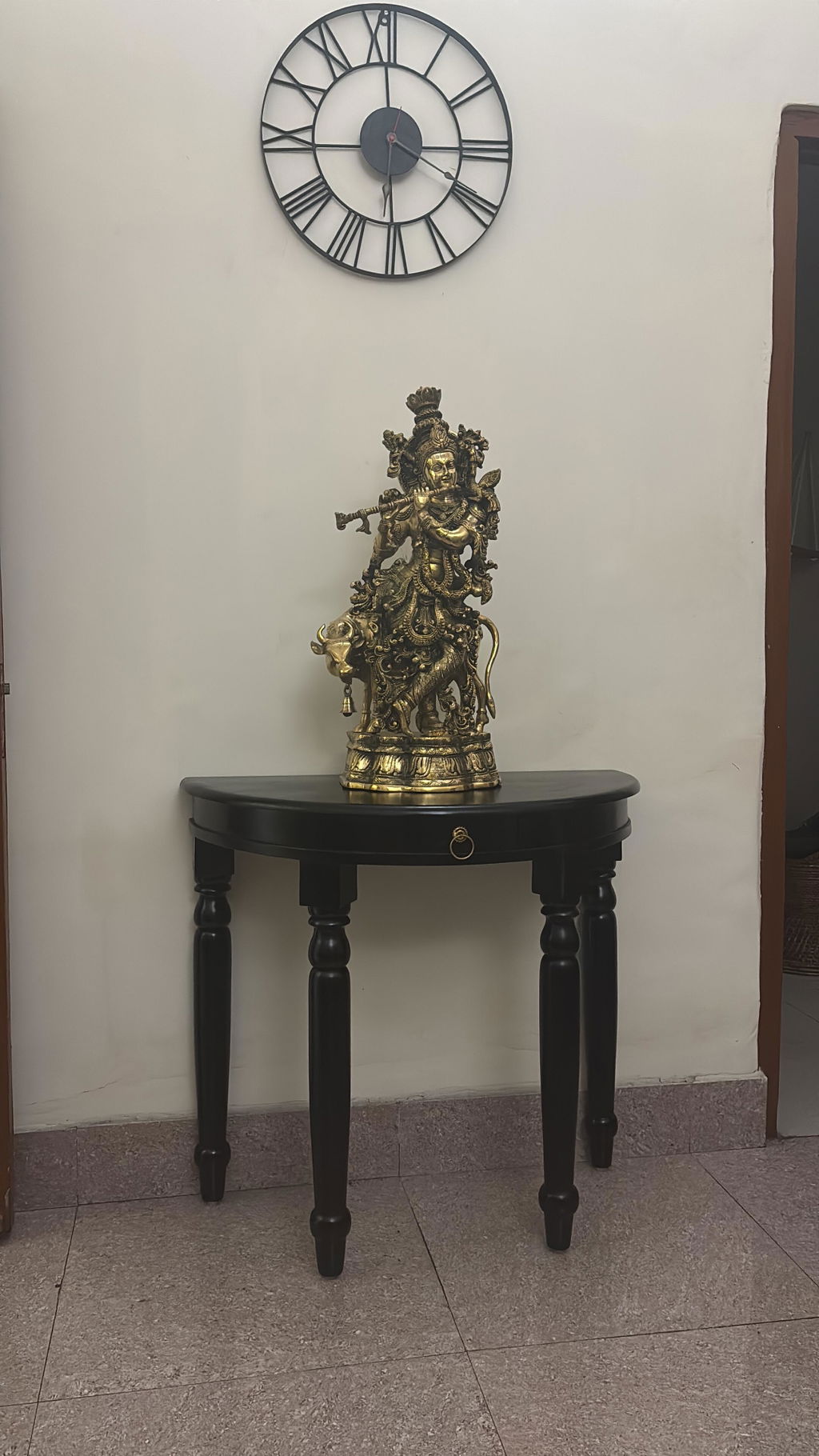
At the entrance it gives you a landing zone for keys, wallets, and everyday items. It also sets the mood for the rest of your home. Walk in, drop your things, and everything has a place.
In the living room it fills wall space that's too narrow for a shelf unit but too visible to leave empty. A few well chosen items on top and it becomes a design feature, not just a table.
Behind a sofa is where a console table really shines. That gap between the sofa back and the wall? A slim console table turns it into usable surface space without taking up any room you'd actually walk through.
In a hallway it breaks the monotony of a long, empty passage. Even a small one with a lamp and a plant can make a hallway feel intentional instead of forgotten.
In the bedroom some people use it as a simpler alternative to a bulky dressing table. If you don't need a mirror station with drawers, a console table with a wall mirror above it does the job with less visual weight.
The real takeaway here is that a console table isn't limited to one room or one purpose. It adapts to whatever you need it to do. That flexibility is what makes it such a smart piece of furniture to own.
What Makes Solid Wood the Better Choice?
When you browse console tables online, you'll see everything from MDF to particle board to engineered wood to metal frames. They all have their place. But if you want something that genuinely lasts and looks better over time, solid wood is in a different category altogether.
It actually lasts. A well built solid wood console table can serve you for 15 to 20 years without any structural issues. MDF and particle board furniture? You're looking at 3 to 5 years before edges start chipping, surfaces start peeling, or joints start loosening.
It looks real because it is real. The grain pattern on a solid wood surface is natural. You can feel the texture under your hand. Every piece is slightly different because no two cuts of wood are identical. That's something a printed laminate on MDF can never replicate, no matter how advanced the printing gets.
It handles Indian conditions. Our homes deal with monsoon humidity, summer heat, and dry winters, sometimes all within a few months. MDF swells in moisture. Particle board crumbles. Solid wood, when properly finished, handles all of it with minimal fuss.
It ages in your favour. This is the part most people don't consider. MDF looks its best on the day you buy it and goes downhill from there. Solid wood actually develops more character as it ages. The tones deepen. The grain becomes more visible. A sheesham console table that's been in your home for a decade often looks richer than it did when it was new.
It's a more responsible choice. Solid wood is natural and renewable. MDF manufacturing involves synthetic adhesives and resins that aren't great for the environment. If making better choices matters to you, this is worth knowing.
At Furnisquare, this is exactly why we work exclusively with solid wood. No MDF. No particle board. No engineered wood dressed up to look like the real thing. Just genuine wood, honestly crafted.
Which Wood Type Should You Go For?
This is where your decision gets more specific. Different solid woods have different strengths, different looks, and different price points. Here's a clear, honest breakdown of what's available and what each type is best suited for.
Sheesham (Indian Rosewood)
The most widely used wood for quality furniture in India. Sheesham is dense, strong, and naturally resistant to termites. The colour ranges from warm golden brown to deep chocolate, with grain patterns that are rich and distinctive.
It strikes the best balance between durability, appearance, and price for most Indian homes. Not too expensive, not entry level. Right in the middle where quality meets value.
Mango Wood
Lighter in colour and slightly softer than sheesham, mango wood has become popular for its modern, natural appearance. Each piece shows unique grain variations and subtle colour shifts that give the furniture real visual interest.
For a console table, which doesn't bear heavy loads the way a dining table or bed does, mango wood is more than strong enough. And it comes at a friendlier price point.
Teak
If the budget is flexible and you want the absolute best, teak is the answer. Natural oils in the wood make it resistant to water, insects, and decay. It's the gold standard for durability and has been used for centuries in everything from furniture to shipbuilding.
The price reflects the quality. Teak costs significantly more than sheesham or mango wood. But what you get is furniture that can genuinely outlast you.
Acacia
A solid budget option for people who want real wood without a premium price tag. Acacia has an attractive grain pattern and handles everyday use well. It's not as durable as sheesham or teak over the very long term, but for a console table, it does the job reliably.
The simple version? Sheesham gives you the best overall value. Mango wood is great if you prefer a lighter, contemporary look. Teak is for those who want the best and are willing to pay for it. Acacia is perfect if budget is your primary concern but you still want genuine wood.
If you're looking beyond console tables and want to explore how real wood transforms other rooms too, our full range of wooden furniture online covers everything from beds and dining sets to storage and decor. Every piece follows the same rule: real wood, honest design, built for how Indians actually live.
Getting the Size Right
Height should fall between 75 cm and 85 cm for most uses. This puts the surface at a comfortable level for placing and picking up items. If you're putting the table behind a sofa, aim for the console to sit at the same height as the sofa back, or just slightly below it.
Width depends on your wall. A good rule of thumb is that the console table should cover roughly 60% to 75% of the wall space where it's going. A 200 cm wall works well with a 120 cm to 150 cm wide table. Too small and it looks lost. Too wide and it overwhelms the wall.
Depth is what most people overlook. Console tables are meant to be slim, that's their whole point. For tight spaces like hallways or narrow entryways, stick to 25 cm to 30 cm. For living rooms where you have more breathing room, 35 cm to 40 cm gives you a more usable surface.
The practical test: Before you order, mark out the table dimensions on your floor with tape. Live with it for a day. Walk past it. Open nearby doors. See if it feels right. Two minutes of taping can save you the hassle of a return.
Finding the Right Style
The style of your console table should feel connected to the rest of your space. Here's a quick breakdown of the main directions you can go. Modern and minimal works for clean, contemporary homes. Straight lines, smooth surfaces, no heavy ornamentation. The wood does the talking. This style fits well in most urban apartments across India.
Rustic is for homes that lean into warmth and texture. Visible wood grain, natural knots, matte finishes. It pairs well with earthy interiors, handmade decor, and spaces that feel lived in and loved. Mid century has a retro elegance. Tapered legs, gentle curves, warm wood tones. It's a style that's seen a strong comeback in Indian interior design recently.
Contemporary Indian blends modern form with traditional touches. Think clean lines with brass hardware, or simple shapes with subtle hand carved details. It's a style that feels both current and rooted.
The team at Furnisquare designs wooden console tables across these styles, always keeping real Indian homes in mind. Because a console table that looks beautiful in a design studio means nothing if it doesn't feel right in your actual living room.
Do You Need Storage?
Drawers work well if your console table is near the entrance or in a space where small items tend to accumulate. Keys, chargers, notebooks, all tucked away so the surface stays clean.
Open shelves are good for display. Books, small plants, decorative boxes. They add visual layers and make the console table look more styled. But everything is visible, so you need to keep things reasonably organized.
Fully open tables (just a top surface and legs) are the lightest visually. They work best in small spaces or minimalist homes where you want the table to feel almost weightless.
If you're not sure, a console table with one drawer and an open shelf below tends to work for most people. It gives you hidden storage, display space, and a clean top surface, all in one piece.
What Should You Actually Spend?
Under ₹10,000 gets you simple designs in acacia or basic mango wood. Functional but not remarkable.
₹10,000 to ₹25,000 is where most solid wood console tables from quality brands sit. Good sheesham or mango wood, proper finishing, thoughtful design. This is the range where you get genuine value.
₹25,000 to ₹50,000 brings you into premium territory. High grade wood, handcrafted details, finishes that feel special. These are pieces you buy once and keep for 15+ years.
Above ₹50,000 is luxury. Custom work, rare wood, artisan craftsmanship. Statement furniture that becomes part of your home's identity.
The question isn't really "how much should I spend?" It's "how long do I want this to last and how important is it to my space?" Answer that honestly and the right budget usually becomes obvious.
Common Mistakes Worth Avoiding
Not measuring first. It happens constantly. Someone finds a table they love, orders it, and then discovers it doesn't fit the wall, blocks a doorway, or sits awkwardly next to the sofa. Measure before you browse, not after you buy.
Trusting "wooden look" labels. A lot of console tables sold online describe themselves as "wooden" when they're actually MDF or particle board with a laminate finish. Always check the product details for the specific wood type. If it's not mentioned clearly, that's a red flag.
Ignoring the wall above. A console table and the wall behind it work as a single visual unit. If you put a beautiful wooden console table against a completely bare wall, it will always feel like something's missing. Plan the wall, whether it's a mirror, artwork, or shelves, at the same time as you choose the table.
Buying on price alone. The cheapest console table isn't the best deal if you're replacing it in two years. And the most expensive one isn't automatically the best either. Focus on the wood quality, the craftsmanship, and how well it fits your actual needs.
Why Furnisquare?
There are plenty of places to buy furniture online in India. So what makes Furnisquare worth your attention? Every piece is real solid wood. Sheesham, mango wood, teak. Clearly mentioned, honestly represented. No MDF, no particle board, no misleading descriptions.
Design is taken seriously. These aren't mass produced generic shapes. Every console table in the Furnisquare collection is designed with intention, balancing aesthetics with practicality for how people actually live in India.
What you see is what you get. Clear product descriptions, actual dimensions, real wood type mentioned, honest pricing. Furnisquare believes transparency isn't a marketing strategy. It's just the right way to do business.
The customer experience matters. From the first time you browse the website to the moment your furniture is delivered, and beyond, the focus is on making the experience smooth, helpful, and genuinely pleasant.
At Furnisquare, furniture isn't just about filling space. It's about creating spaces that feel like you. Spaces you're proud to walk into. Spaces where every piece has a purpose and a story.
👉 Explore the Solid Wood Console Table Collection at Furnisquare
FAQs
What height should a console table be?
Between 75 cm and 85 cm is standard. If placed behind a sofa, match the height to the sofa backrest for a clean, intentional look.
How can I check if a console table is real solid wood?
Look for the specific wood type in the product details (sheesham, mango, teak, acacia). Real solid wood shows natural grain variations, meaning every piece looks slightly different. If the listing says "engineered wood" or doesn't mention wood type at all, it's likely not solid wood.
Will a console table work in a small flat?
Yes. Console tables are designed for exactly this. Choose a depth of 25 cm to 30 cm for tight spaces and go with an open design to keep things feeling airy.
Which wood handles Indian weather best?
Sheesham and teak are both excellent for Indian climate conditions. They manage humidity, heat, and temperature changes far better than MDF or engineered wood alternatives.
How long will a solid wood console table last?
With basic care, 15 to 20 years easily. Some teak and sheesham pieces last much longer. Compare that to MDF furniture which typically shows significant wear within 3 to 5 years.